
The Ultimate Solution for Noise Reduction & Shock Absorption in Material Handling
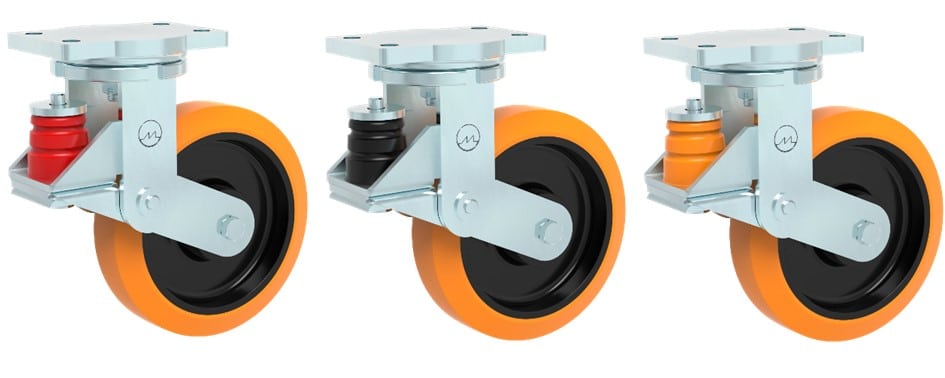
In modern industrial facilities, noise pollution is more than just an annoyance—it’s a productivity killer, a safety hazard, and a compliance nightmare. Manufacturing plants, logistics centers, and hospitals spend thousands every year managing noise levels that exceed recommended safety standards.
The culprit? Often, it’s something as simple as poorly engineered castors on equipment trolleys, carts, and transport dollies.
Did you know? Cheap spring-loaded castors can generate noise levels exceeding 100 dB—comparable to a jackhammer—while quality engineered castors operate silently at less than 75 dB.
For over 48 years, Muvtons has been at the forefront of castor and wheel manufacturing, and our Spring Loaded Castors represent the pinnacle of engineering excellence. In this comprehensive guide, we’ll explore what makes our spring-loaded castors superior, how they work, and why they’re the smart investment for forward-thinking industrial operations.
What Are Spring Loaded Castors? Understanding the Basics
Spring-loaded castors are specialized wheels equipped with integrated spring mechanisms that compress under load and return to their original position when the load is removed. They serve a critical dual purpose:
𝗟𝗼𝗮𝗱 𝗦𝘂𝗽𝗽𝗼𝗿𝘁- Distribute heavy loads evenly across swivel points, supporting equipment weighing from 100 kg to 50 tonnes.
𝗦𝗵𝗼𝗰𝗸 𝗔𝗯𝘀𝗼𝗿𝗽𝘁𝗶𝗼𝗻- Compress under load to absorb vibrations and protect transported components from damage during movement.
𝗡𝗼𝗶𝘀𝗲 𝗜𝘀𝗼𝗹𝗮𝘁𝗶𝗼𝗻- Prevent direct metal-to-metal contact, dramatically reducing operational noise levels.
𝗖𝗼𝗺𝗽𝗼𝗻𝗲𝗻𝘁 𝗦𝗮𝗳𝗲𝘁𝘆- Create a protective barrier between the castor mechanism and valuable cargo.
The Problem: Why Cheap Spring Loaded Castors Fail
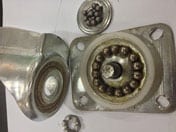
Cheap Non-Engineered Castors:
- Press-Steel formed ball raceways.
- Thin-Sheet Metal, Un-Hardened ball raceways.
- High-carbon, high-chrome steel balls running on Soft Sheet Metal Raceways result in indentations in the ball raceways within 2-3 Months.
- Extremely High Play in the Swivel Head.
- High Push-Pull efforts & Noise Levels due to Un-Hardened Swivel Raceways.
- Zero Guarantee & Low Service Life of Castors.
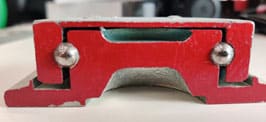
Muvtons Engineered Castors:
- Single-Piece EN-8 forged alloy steel top plate & fork base.
- CNC Precision-Machined & INDUCTION HARDENED ball raceways results in “No-Play” in the Swivel Head.
- High Carbon, High Chrome Steel Balls running on Induction-hardened ball raceways.
- Smooth Swivel head movement leading to Extremely Low Push-Pull efforts .
- Noise – Less Castors.
- Guarantee of 2 Years on the Swivel Head.
The Root Causes of Failure
The problems with cheap castors stem from fundamental design and manufacturing shortcuts:
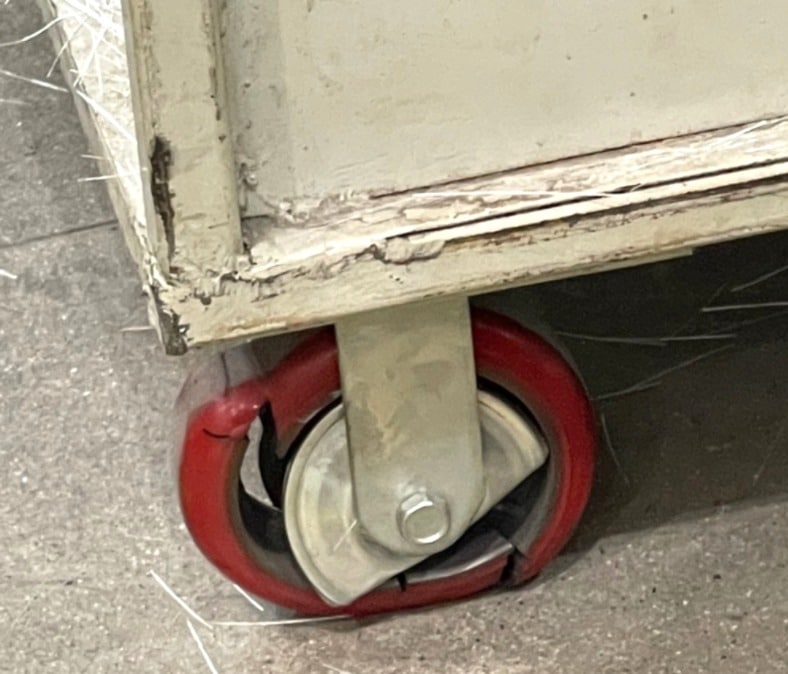
Poor Material Selection: High-carbon, high-chrome steel balls running on soft, un-hardened sheet metal raceways create indentations within 2-3 months of use.
Inadequate Hardening: Without induction hardening, ball raceways wear rapidly, creating excessive play in the swivel head.
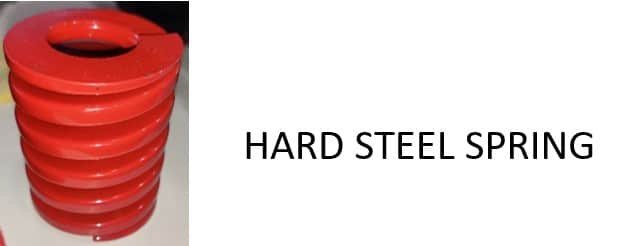
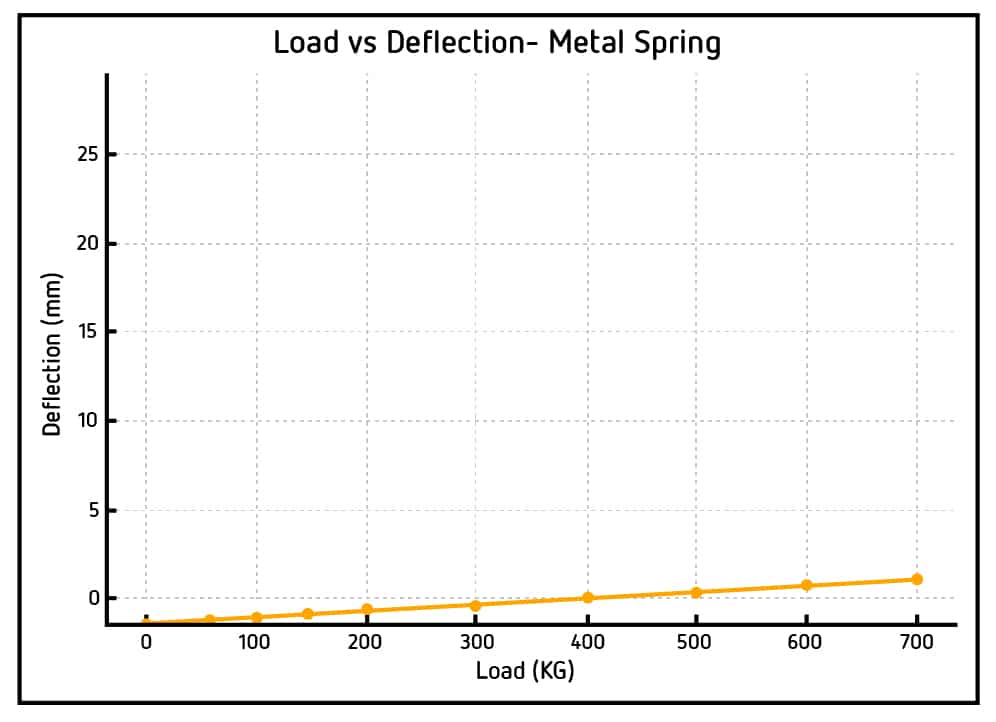
Design Flaws: Hard steel springs that don’t deflect under load provide zero shock absorption and component protection.
No Quality Control: Absence of date stamping and traceability means no accountability for product quality.
Spring Mechanism
Cheap Spring-Loaded Castors: Hard Steel Springs
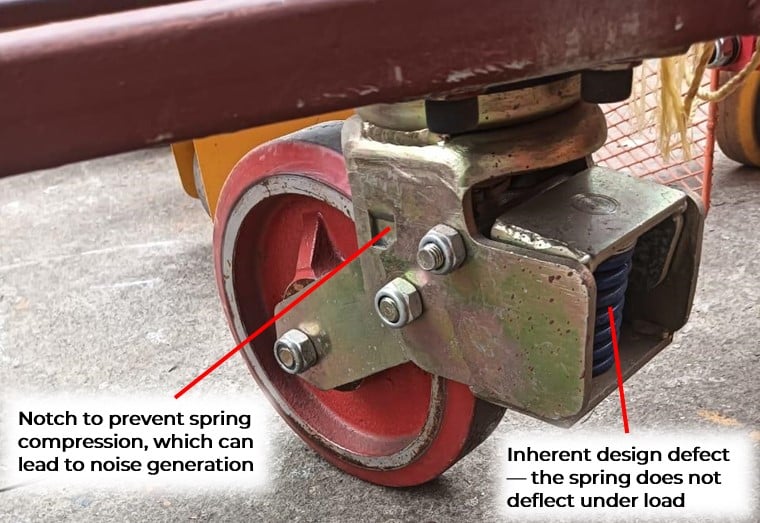
- Steel springs won’t compress under “no load” or “full load” scenarios.
- Zero protection of components being transferred (no spring compression = no shock absorption)
- All shocks and vibrations transfer directly to components
- Results in extreme noise generation (>100 dB) during power towing
- Components suffer damage from continuous vibration exposure
The problems with cheap castors stem from fundamental design and manufacturing shortcuts:
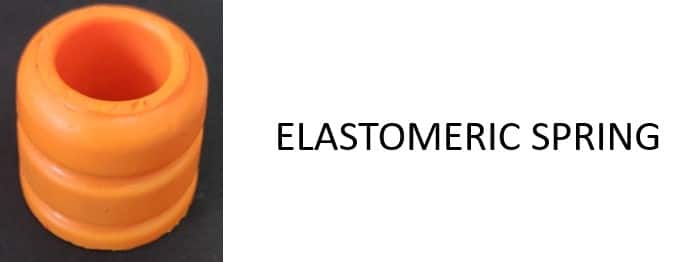
Muvtons Engineered Castors: Elastomeric Springs
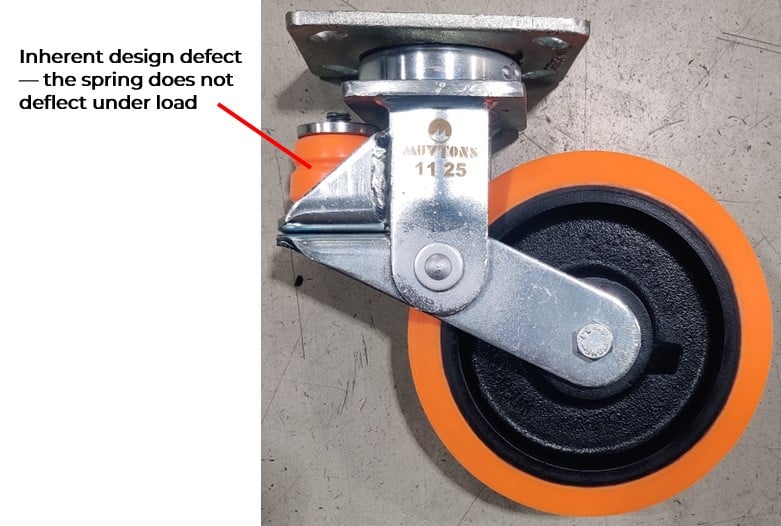
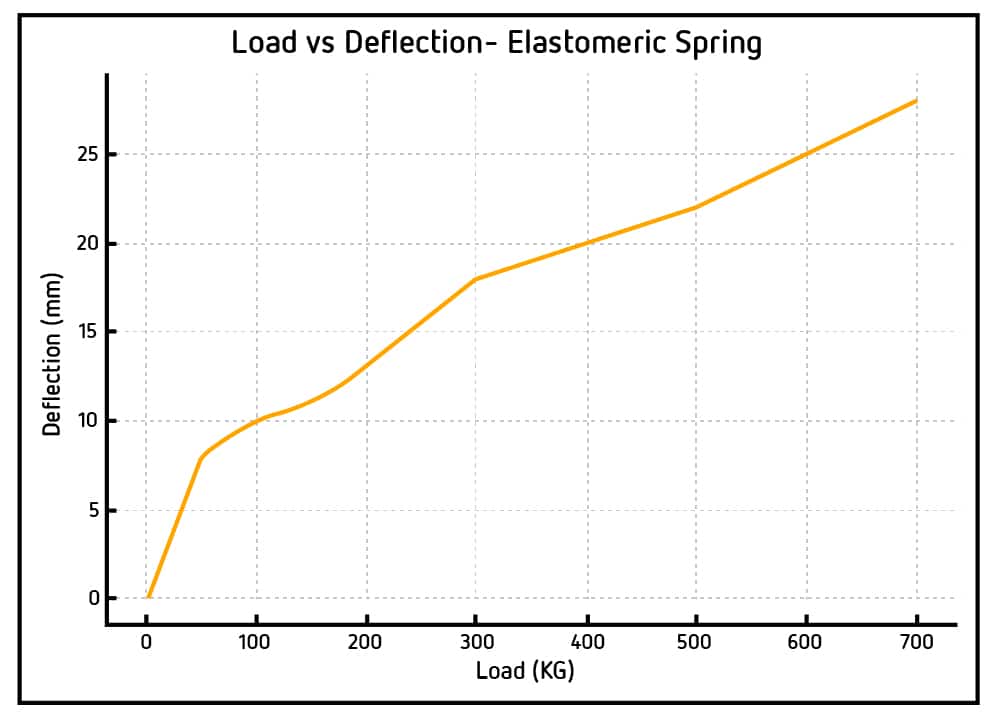
- Elastomeric springs are rated for specific load ranges based on trolley weight
- Compress perfectly under load, even on empty dollies
- Components are properly isolated from shock and vibration
- Protect components from shock and vibration during power towing
- Result: Lower noise levels (<75 dB) and extended equipment lifespan
Advanced elastomeric springs compress smoothly under load for superior shock absorption and noise reduction
The Critical Difference: Spring Mechanisms Explained
The heart of any spring-loaded castor is its spring mechanism. Here’s where engineered castors dramatically outperform budget alternatives:
Cheap Non-Engineered Castors:
Muvtons Engineered Castors:
Benefits of Using Muvtons Spring Loaded Castors
𝗦𝗶𝗹𝗲𝗻𝘁 𝗢𝗽𝗲𝗿𝗮𝘁𝗶𝗼𝗻𝘀
Significantly reduces industrial noise, improving workplace environment.
𝗦𝗵𝗼𝗰𝗸 & 𝗩𝗶𝗯𝗿𝗮𝘁𝗶𝗼𝗻 𝗜𝘀𝗼𝗹𝗮𝘁𝗶𝗼𝗻
Protects sensitive components from transit damage.
𝗘𝗻𝗵𝗮𝗻𝗰𝗲𝗱 𝗣𝗿𝗼𝗱𝘂𝗰𝘁𝗶𝘃𝗶𝘁𝘆
Smooth movement reduces operator fatigue and improves efficiency.
𝗟𝗼𝗻𝗴 𝗦𝗲𝗿𝘃𝗶𝗰𝗲 𝗟𝗶𝗳𝗲
Engineered for durability with 2-year guarantee.
𝗙𝗶𝘁 & 𝗙𝗼𝗿𝗴𝗲𝘁 𝗦𝗼𝗹𝘂𝘁𝗶𝗼𝗻
Minimal maintenance with reliable performance over time.
𝗔𝗽𝗽𝗹𝗶𝗰𝗮𝘁𝗶𝗼𝗻𝘀
Muvtons Spring Loaded Castors are ideal for:
- Automotive Industry
- Power towing trailers
- Assembly line trolleys
- Heavy-duty logistics movement
- Industrial material handling systems
Live Visual Testing: Conventional vs Muvtons Spring Loaded Castors
Conclusion
Choosing the right castor is not just about movement—it’s about protecting your products, reducing noise, and improving operational efficiency.
If you’re still using conventional spring-loaded castors, you’re likely facing:
- Excessive noise
- Product damage
- High maintenance costs
Switch to Muvtons Spring Loaded Castors for a safe, silent, and smart material handling solution.
